

Career Development

Career Development
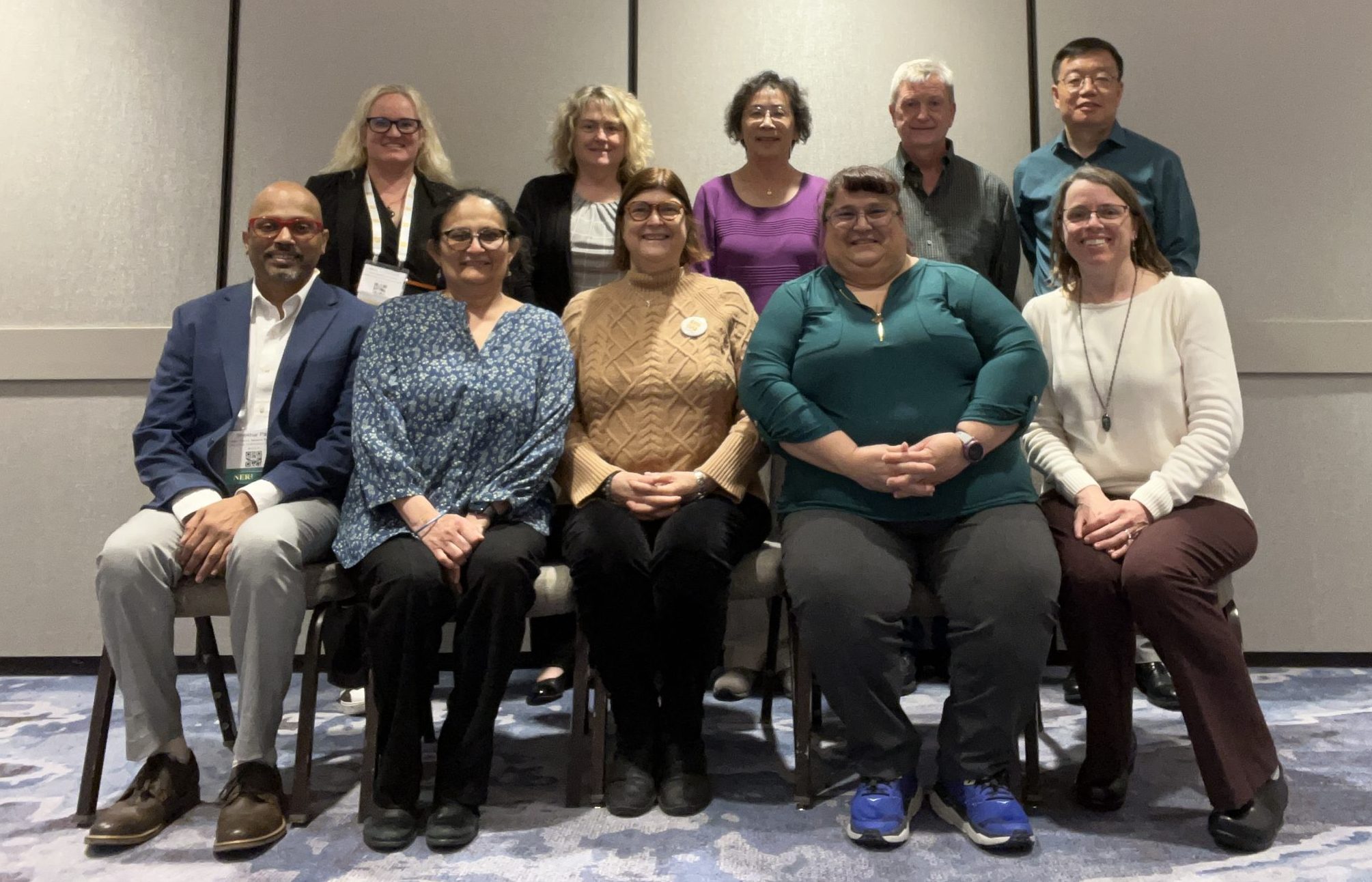
The mission of the Career Development Committee is to facilitate career advancement for the ABRF membership, whether one is looking for a new job, or striving to advance in a current role. This mission is based on the understanding that research core professionals are unique and operate at the interface of the administrative, financial and scientific sectors of a research organization. As such, skills beyond scientific expertise are critical for career advancement. CDC achieves its mission through various initiatives, of which the ABRF mentoring program is the cornerstone that aims to provide ABRF members with career advice and network opportunities.
Questions or interest in joining an ABRF committee? Contact us!

ABRF members have access to two mentoring options.
- Mentor-Mentee Pairing: The CDC facilitates one-on-one mentorship by pairing mentees with experienced mentors. This structured relationship is designed to last for a fixed period, providing targeted guidance and network building opportunities.
- Peer-to-Peer Mentoring: This option fosters collaborative learning through virtual small-group discussions, allowing participants to share experiences and insights in an interactive setting.
For more details on how each mentoring option works, please visit the Mentoring page.
Supporting Diversity, Equity, and Inclusion (DEI)
CDC has long believed that inclusion of diverse perspectives leads to better ideas, stronger organizations, and sustainable futures. The Committee frequently discusses how to increase participation of under-represented minorities in our career track, and in ABRF. Previous attempts to address this centered around recruiting student applicants to the FASEB MARC travel award to attend ABRF meetings. CDC is developing new DEI approaches that would be more immediately beneficial to both under-represented minorities and to ABRF.
Developing a New Article to Document and Provide Analytics to the ABRF Mentoring Program
Over the last five years, the CDC has learned through this process a great deal about what makes a mentoring program successful. The history of this effort may be of interest to the general ABRF community. Furthermore, a critical analysis of our successes and failures may be useful to other professional societies who want to create mentoring programs. Therefore, the committee has been working on a manuscript describing the development of the ABRF Mentoring Program to share this valuable information.
CDC Events
Speed Mentoring at ABRF 2024
The Career Development Committee hosted “Speed Mentoring” for the fifth time at the ABRF 2024 meeting. This session has been organized and well received since the 2020 annual meeting. It enables short (10 minute) meetings between a mentee and several mentors, with the goal of helping the mentee get immediate feedback on a specific issue, or make a connection that could form the start of a longer mentoring relationship. The 2024 session was an in-person event.
Hiring and Getting Hired in the Age of Automated Resume Screening & Behavioral Interviews at ABRF 2024
This session examined the recruiting and interviewing process from three perspectives. For the hiring manager, the process has changed for the better with the addition of behavioral/competency-based questions, but for the worse with automated resume screeners. For the candidate, key questions were covered such as what constitutes a good resume/CV and cover letter, how to prepare for interview, and how to advocate for herself/himself during the interview. Finally, from the HR perspective, major topics included how hiring trends have changed in the last five years with Zoom and in-person interviews. This session was co-organized by CDC member Laura Lewis-Tuffin of Mayo Clinic Flordia. A recording of the session is available on ABRF's YouTube Channel, and presentation files containing sample behavioral interview questions and a candidate evaluation form are also available for download.
Photos from Past CDC Events
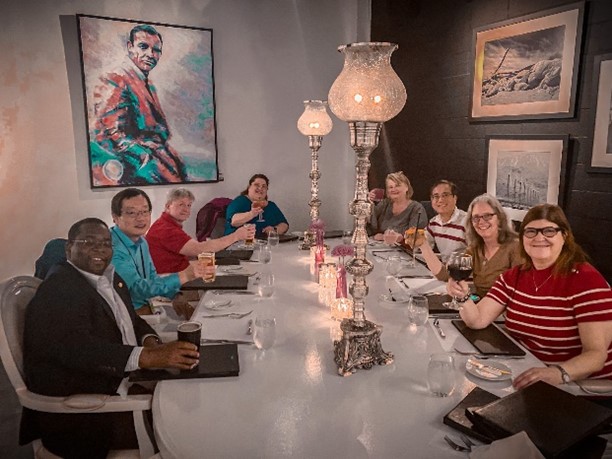
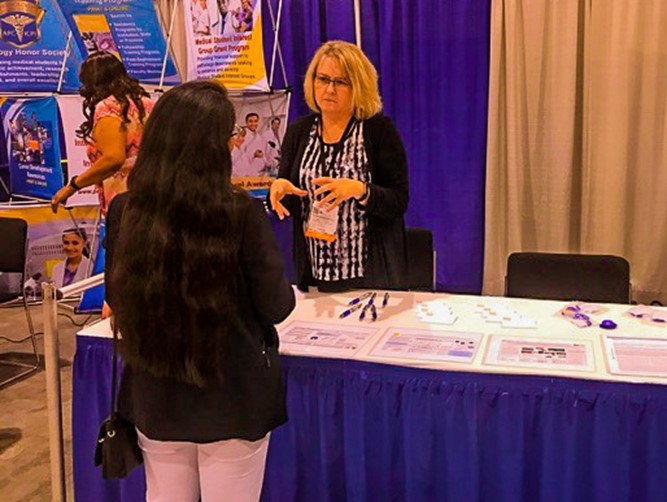

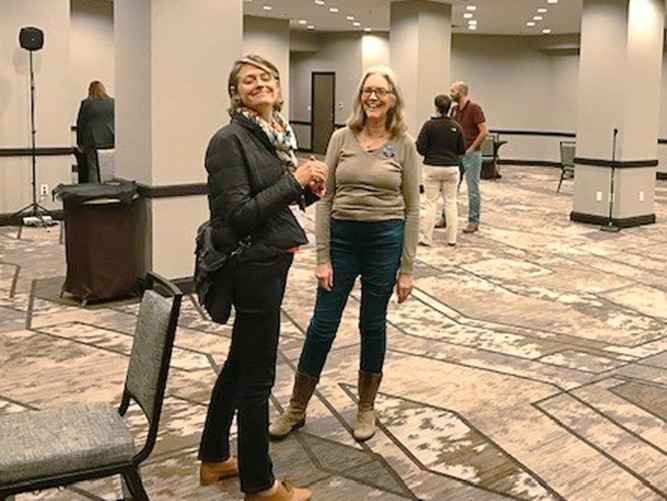
Ongoing Initiatives
Core-Specific Job Families
Creation of core-specific job families is an important step to develop a robust career path for ABRF members. Many U.S. Institutions have created job families specifically for directors, managers and staff working in core facilities. The rationale for specific job families is that these positions require advanced training and expertise in research technologies, effective communication skills, and business and finance acumen. Core positions are typically not soft-money positions making them an attractive and robust career path. These job families have names like core scientist, core technician, core staff scientist, core research assistant, or core facility research professional. The following institutions have provided information with core-specific job families. If you would like to add your institution to the list, please contact CDC.
- Jackson Laboratories (86K)
- Moffitt Cancer Center (12K)
- Northwestern University (24K)
- UCSF Gladstone Institute (33K)
- University of Iowa (1,668K)
- University of Kansas Medical Center (457K)
- University of North Carolina Chapel Hill (161K)
- University of Pennsylvania (172K)
- Vanderbilt University Medical Center
Career Development Resources
Core Management Courses (courses are listed for the benefits of ABRF members, not endorsed by CDC)
Leadership and Management in Core Facilities
June 13-16, 2022 (8th Annual Course)
In-person, delivered by Northwestern University Kellogg School of Management
Registration details to be posted here when available.
This executive education program is designed specifically for directors, managers and business administrators overseeing core facilities. The program was developed to enhance participants' ability to think strategically and address the unique challenges of operating a small business within a non-profit environment. Topics to be covered include defining your value proposition, pricing strategies, managerial accounting, marketing, team building & leadership, growth & sustainability, and innovation. In addition, participants work in teams to develop "applied learning projects" that enable them to implement something new into their core facility that they learned about in the course. Course registration is limited to the first 30 applicants, and registration is online.
This usually 4-day course will be delivered by the same esteemed faculty from the Kellogg School who have made the course an exceptional experience for scientists and research administrators in previous years. In 2022 the course will be delivered in person again.
Current Committee Membership
- Kevin Gerrish - National Institute of Environmental Health Sciences (Co-Chair)
- Shekhar Patil - Icahn School of Medicine at Mount Sinai (Co-Chair)
- Regenia Campbell - East Tennessee State University
- Anitha Chennat - University of Michigan
- Andy Chitty - Oregon Health & Science University
- Emyly Fernandez - Mayo Clinic
- Luellen Fletcher - University of Pennsylvania
- Laura Lewis-Tuffin - Mayo Clinic
- Heather (Brewer) Olson – Pacific Northwest National Laboratory
- Jane Srivastava - Gladstone Institute Flow Cytometry Facility
(Executive Board liaison) - Sherry Thornton - Cincinnati Children’s Hospital
- Xinkun ‘Sequen’ Wang – Northwestern University
- Ling Xuei - Indiana University School of Medicine
Prior Committee Members
- Jim Farmar (Member)
- Nancy Fisher (EB Liaison)
- Gabriela Grigorean (Member)
- Philip Hockberger (Member)
- Lisa MacDowell (Member)
- Deb McMillen (Member)
- Sheenah Mische (Member)
- Claudius Mundoma (Executive Board liaison)
- Christine O’Connell (Member)
- Jack Simpson (Ad hoc)
- Paula Turpen (Member & Executive Board liaison)