
Business Skills for Shared Research Resources
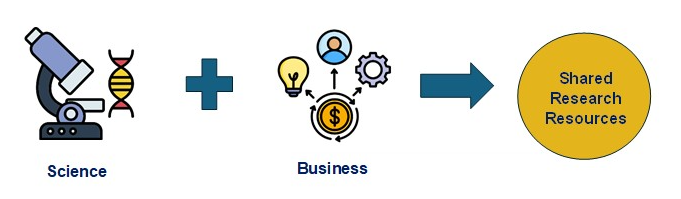
The ABRF Business Skills for Shared Research Resources (Cores) program is a hands-on experience to address the management aspects of operating a Core facility. The seemingly straightforward fee-for-service model used in most cores is a sophisticated integration of science and business. This includes how to:
- recognize the value of your customer
- evaluate the performance of a Core
- define how a Core is managed to its maximum potential
Core Facilities are born out of scientific need, but they are also driven by compliance and Uniform Guidance set forth by the Federal Government. Even though these two entities work in tandem, there often is a gap in understanding the relationship between science and business by the scientists and administrators of core facilities.
Through instruction and group exercises, the Business Skills workshop provides attendees with the tools to more effectively communicate and understand the needs and the requirements of Core facilities best business practices, creating a mutually beneficial relationship between Science and Business within the research enterprise.
How Does It Work?

Business Skills for Shared Research Resources emphasizes the way science and business work together to operate efficiently. The sessions are designed to be highly interactive, including work in small groups.
The ABRF Education Committee and workshop instructors are available to work with you to determine which components of the Business Skills program could provide the greatest value for your Core personnel. The Business Skills faculty includes accomplished Core professionals from leading institutions of various sizes, structures, and approaches to shared research resources management.
From an overview of the full set of workshop topics to a tailored agenda with more detailed attention to specific areas, ABRF can adapt its content to meet your needs.
Review program component options below to learn more about how to bring the collective expertise of the ABRF Business Skills faculty to your institution. Contact us if you have questions or to setup a time to discuss a program for your Core facility.
Program Components
Value Proposition for Shared Research Resources (Core Facilities)
An overview of how Shared Research Resources (SRRs) support Equity, Productivity, Recruitment, and Sustainability for an institution's research infrastructure. Examples and illustrations used to demonstrate the return on investment through SRRs and the measurable impact on the productivity of research instrumentation, scientific publishing, and training early career investigators. Learners will understand the definition of a shared research resource and how they contribute to collaboration and interdisciplinary research.
Compliance, Compliance, Compliance
Participants will review the applicable regulations for Core facilities, including Uniform Guidance
2 CFR 200. 468
The costs of Core services, when material, must be charged directly to applicable awards based on actual usage of the services based on a schedule of rates or established methodology that:
- Does not discriminate between activities under Federal awards and other activities of the non-Federal entity.
- Is designed to recover only the aggregate costs of the services normally both direct & allocable share of indirect costs.
- Rates must be adjusted at least biennially, considering deficits or surplus from the previous period.
Participants will complete exercises to evaluate whether specific activities or expenses are compliant with applicable regulations.
Capital Equipment
An introduction to the definition and categories of capital equipment within SRRs, along with the range of funding sources used to support acquisition, ownership, and management of these state-of-the-art resources. Learners will understand the benefits and considerations for each type of equipment acquisition and strategies to pursue funding based on current and projected needs. In addition, participants will learn more about the importance of replacement planning, including maintenance, repair and service costs, along with options for measuring and tracking equipment usage to support compliance, efficiency, and financial sustainability.
Business Planning
An overview of the elements of a Business Model for Shared Research Resources including personnel, expenses, equipment, space, user fees/rates, and external funding support. Includes exercises on how to apply FAIR principles within SRRs, to communicate the range of services and resources available through SRRs, and their contribution to the institution’s mission and goals. Learners will be introduced to the Business Model Canvas, a framework to capture the structure and operations of an SRR, as well as how to evaluate SRR operations.
Rate Setting
Introducing how recharge rates are calculated to identify break-even points based on usage and expenses. Includes a discussion of defining services available, identifying applicable expenses, cost allocation principles, usage calculation, and adjustments to break even analysis. Participants will review sample cost structures to develop proposed rates for a range of services within a model Shared Research Resource facility.
Strategic Planning
Learners will be able to draft short and long-term strategic plans for shared resource resources, assess utilization and stakeholder alignment, and make strategic investments that align with institutional missions. Learners will also obtain practical tools and resources on best approaches to strategically manage their SRR’s to maximize their output and impact to all stakeholders.
Active Management and Assessment
Participants will learn metrics for performance and reporting and practice using technology tools like scorecards, dashboards, and publication tracking for monitoring and reporting. Reliable, standardized sources of data are critical to fostering continual improvement at the core/shared resource and required by the institution if it is to make sound investments in its shared research resources infrastructure.
Audit Preparedness and Risk Management
Learners will walk away with an audit awareness and preparedness, with emphasis on how they can build and streamline quality management systems for their SRR and understand the requirements to have a successful quality/regulatory audit, including practical tips/tricks and a virtual mock audit.” Key topics addressed include:
- Definition and purpose of audits in biomolecular resource facilities.
- Regulatory and compliance frameworks (e.g., GLP, CLIA, CAP, ISO 17025).
- Why audits matter: quality assurance, funding, and operational integrity.
- Different types of audits: internal, external, regulatory, and third-party audits.
- Building a quality management system (SOPs, components)